Business Loan Marketing: How Lenders Show Up in AI Answers
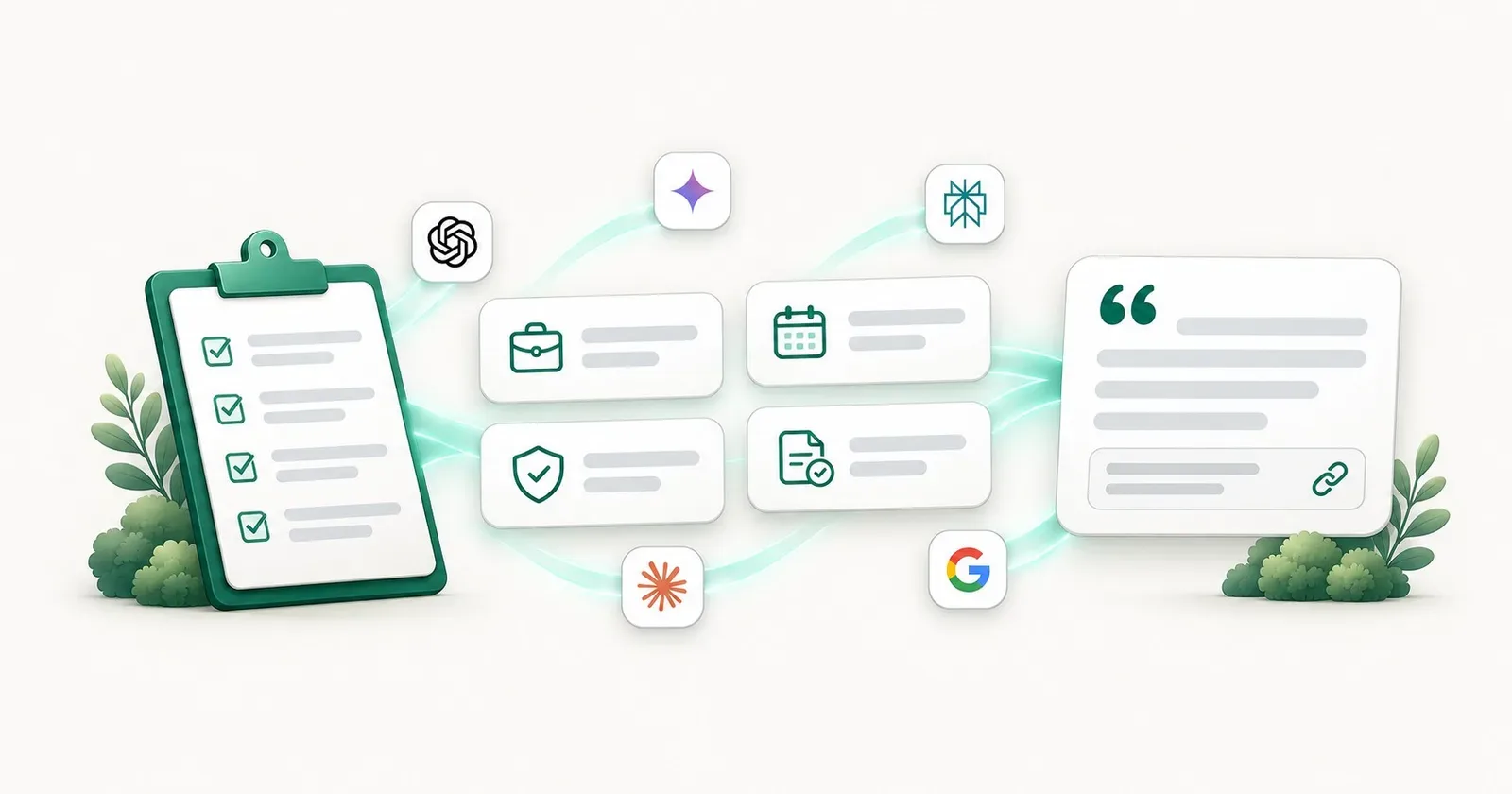
AI answers now name lenders directly, and you are named when your pages clearly answer the borrower's real questions: purpose, geography, eligibility, repayment, and how to apply. Google says existing SEO best practices still apply, so the work is making loan facts readable as text, not chasing new tricks.
The short version
Business loan marketing has a new gatekeeper. A small business owner no longer scans ten blue links and picks a lender. They ask an AI assistant a direct question, such as who offers working capital loans for restaurants in Ohio, and the assistant names a few institutions. If your pages do not answer that kind of question in plain text, you are not in the answer.
What the engine actually reads
Start with what is documented. Google says existing SEO best practices remain relevant to AI Overviews and AI Mode, and that no special optimization, AI text files, or special schema is required, according to Google's guide to AI features. That is the good news: the same crawlable, well-organized pages that served search still serve AI answers.
The catch is eligibility. Google says a page must be indexed and eligible for a search snippet to qualify as a supporting link, and that eligibility does not guarantee crawling, indexing, or serving. So a beautiful loan page that is blocked, buried, or rendered only inside an image may as well not exist.
Google also says AI Overviews and AI Mode may use related searches across subtopics and data sources, and that responses and supporting links vary. In practice, one borrower question fans out into many smaller questions. The engine looks for pages that answer each piece: loan purpose, location served, who qualifies, how repayment works, and how to apply. These claims describe Google's own features. Other AI assistants work differently and publish less, so test each one directly rather than assuming the same rules.
The five questions your pages must answer
Borrower questions about business loans cluster around five topics. A page that answers all five gives an engine something to quote. A page that answers none gives it nothing.
Purpose. State what each loan is for. Equipment, working capital, real estate, refinancing. The SBA says general eligibility normally considers what the business does, its ownership, where it operates, size standards, ability to repay, and sound business purpose, per the SBA's loans page. That list is a ready-made outline for your eligibility content.
Geography. Say where you lend, in words. A map image of your footprint is invisible to a crawler. Write the states, counties, or communities you serve as text on the page.
Eligibility. Be specific about who qualifies and who does not. The SBA notes that lenders and loan programs have unique eligibility requirements and that the lender provides the full list for a particular loan. If you offer SBA products, say which ones. The SBA distinguishes 7(a) loans delivered by participating lenders, fixed-rate 504 financing through Certified Development Companies, and microloans through intermediary lenders, and naming the program and channel you actually use helps an engine match you to the right question.
Repayment. Describe term structure, payment cadence, and how rates are set, in ranges where exact figures are not public. Regulated content such as rates, fees, and disclosures deserves a careful eye before it ships, but silence is not a strategy. An engine cannot cite a page that says nothing.
Application steps. List the steps, the documents a borrower needs, and what happens after submission. This is the question borrowers ask most and lenders answer least.
Facts trapped where engines cannot see them
The most common failure in business loan marketing is not bad content. It is good content in the wrong format. Rate sheets as PDFs with no text equivalent. Eligibility criteria inside a video. Footprint maps as images. Loan officer bios as headshots with no text.
Google recommends making important content available in textual form and maintaining internal links. That means every key fact about every loan product should exist as HTML text on a page that other pages link to. One page per product, linked from your main business lending page, beats one long page that mentions everything once.
How to check whether it is working
Run the test yourself. Open the AI assistants your borrowers use and ask the questions you want to win: best small business lender in your city, SBA loans for a specific industry in your state, equipment financing for a startup. Note whether you are named, who is named instead, and which pages get cited.
Then compare the cited pages against yours. Usually the winner answers one of the five questions more clearly, in text, with specifics. Fix the gap on your page, keep the page indexable, and retest in a few weeks. There is no alert when an answer changes, so put the test on a calendar. When checking by hand runs out of hours, Scanley measures whether the AI engines name your institution across these borrower questions.
What to do this quarter
Pick your three most important loan products. For each, write or fix one page that answers purpose, geography, eligibility, repayment, and application steps in plain text. Link those pages from your business lending hub and from each other. Confirm the pages are indexed. Then run the borrower questions monthly and track whether you appear. That is business loan marketing for AI answers: no new tricks, just the old discipline of saying clearly what you offer, applied to a reader that never calls your loan officer first.
Questions people ask
Does business loan marketing for AI answers require new technical markup?
For Google's AI features, no. Google says existing SEO best practices remain relevant to AI Overviews and AI Mode, and no special schema or AI text files are required. Focus on clear, crawlable text that answers borrower questions.
Why is my loan page not cited even though it ranks in search?
A page must be indexed and eligible for a search snippet to qualify as a supporting link, and eligibility does not guarantee serving. Common causes are facts trapped in images or PDFs, vague eligibility language, or a page that never states geography and purpose in text.
Do Google's rules for AI answers apply to ChatGPT and other assistants?
No. Google's documentation covers only its own AI Overviews and AI Mode. Other assistants retrieve and cite sources differently, so test each one with real borrower questions rather than assuming one set of rules.
What should a business loan product page include?
Answer five questions in plain text: what the loan is for, where you lend, who qualifies, how repayment works, and how to apply. The SBA's eligibility criteria, such as what the business does, where it operates, and ability to repay, make a useful outline.
How often should we test whether AI engines name us?
Monthly is a reasonable rhythm, since answers change without notice and there is no alert when they do. Ask the same fixed set of borrower questions each time so you can compare results across months.