What is fintech SEO when buyers ask AI assistants?
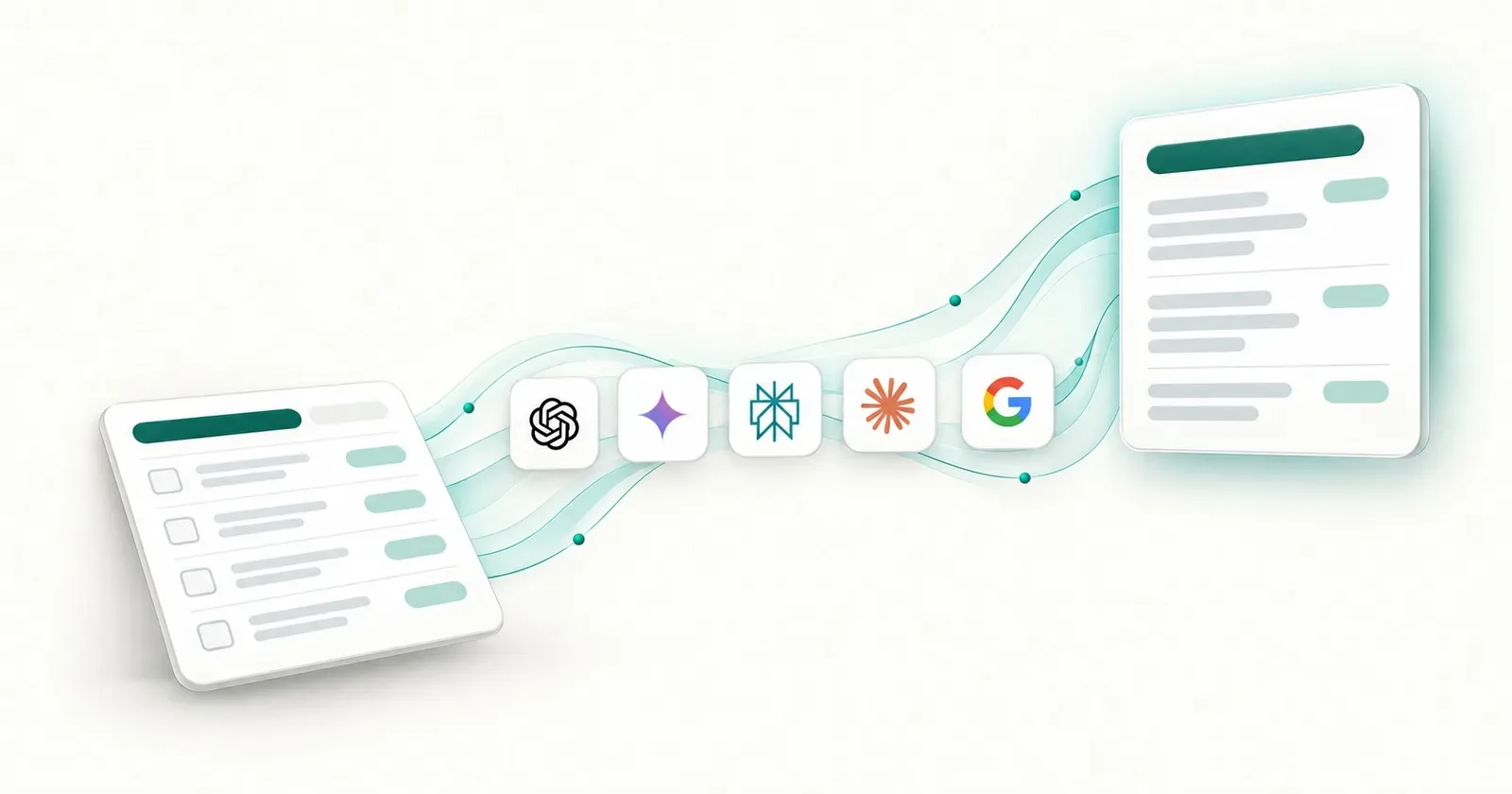
Fintech SEO is making your product and comparison pages eligible to be found, read, and cited when buyers ask AI assistants which tool to use. Google says existing SEO best practices remain relevant for AI features, with no extra requirements. The job: publish helpful pages buyers and search systems can access, then check whether answers name you.
The short version
Fintech SEO is the work of making your pages eligible to be found and cited when a buyer asks which payments platform, lending API, or treasury tool to shortlist. That buyer increasingly asks an AI assistant instead of scanning ten blue links. The answer names a few vendors, and the question gets decided without a click. Your rankings can look fine while this happens.
The good news: the foundation has not changed. Google says existing SEO best practices remain relevant for AI Overviews and AI Mode, with no additional requirements or special optimizations. You do not need special AI markup or a new file for machines. You need helpful, reliable pages that buyers and search systems can access. What has changed is where you check the output.
What the engines actually read
An answer engine builds its response from pages it can crawl, index, and quote. For a fintech, that means three page types carry most of the weight.
Product pages. The assistant needs to state plainly what your product does, who it is for, and what it costs or how pricing works. If your pricing is behind a demo form and your product description is a tagline, the engine has nothing to quote. It will quote a competitor whose page says the thing in words.
Comparison and integration pages. Buyers ask assistants questions like "best ACH API for a small lender" or "does X integrate with Y." Pages that answer those questions directly, in text, are the pages that get cited. If your only comparison content lives in a sales deck or a webinar, it does not exist to the engine.
Docs and help content. For developer-facing fintechs, documentation is often the most-cited content you own. It is specific, dated, and written in plain language. Treat it as a search asset, not an afterthought.
Eligibility is not inclusion
To be eligible as a supporting link in AI Overviews or AI Mode, a page must be indexed and eligible to appear in Google Search with a snippet. That is the floor, not the prize. Google says eligibility does not guarantee crawling, indexing, or serving.
So two fintechs can both be eligible and only one gets named. The difference is usually in the page itself: whether the claim is stated in text an engine can extract, whether the page answers the question the buyer actually asked, and whether the facts are current. A pricing page with no effective date, or a feature list trapped in an image, gives the engine a reason to pass you over.
Also expect inconsistency. Google says AI Mode and AI Overviews may use different models and techniques, so the responses and links can vary. The same is true across assistants. A buyer asking ChatGPT, Perplexity, and Google may get three different shortlists. You are not optimizing for one answer box. You are making your pages the easiest accurate source to cite, then measuring across engines.
What to check on your own pages
Run this pass on your top product and comparison pages. It costs nothing.
Say the category in plain words. If you sell invoice factoring for staffing agencies, that phrase should appear as text near the top of the page, not implied by a hero animation.
Answer the shortlist question directly. Add a section that states who the product is for, who it is not for, and what it integrates with. Assistants quote sentences. Give them sentences worth quoting.
Get facts out of images. Pricing tables, feature grids, and fee schedules rendered as images are invisible to most engines. Rebuild them as HTML text.
Date your claims. Rates, fees, and limits change. A page with a clear "last updated" line is easier to trust and easier to quote. Regulated figures such as rates and fees deserve a careful eye before they change.
Check indexing and snippets. Confirm the page is indexed and shows a normal snippet in search. That is the eligibility floor for AI features.
Check rendering. If your product page depends on heavy client-side scripts, confirm the text is present in the served HTML, not only after scripts run.
How to tell whether it worked
Pick ten to twenty questions a real buyer would ask an assistant before booking a demo: category queries, integration queries, and "X vs Y" queries. Ask them in the major assistants and in Google's AI features. Record whether you are named, which page is cited, and what the answer says about you.
Repeat monthly. Answers shift as engines update and competitors publish. A one-time check tells you where you stand; a recurring check tells you whether a page change moved anything. When checking by hand runs out, Scanley measures whether the AI engines name your institution across those questions on a recurring basis.
One caution: treat this as a new measurement lane, not a replacement for search work. Answer engine visibility and legacy SEO share the same foundation of accessible, useful pages, but they are measured differently and can move independently. A page can rank well and never be cited. Watch both.
Where fintech SEO is heading
The direction is consistent: more buyer questions answered inside the assistant, fewer clicks to vendor sites. The fintechs that show up in those answers will be the ones whose pages state specific, current, quotable facts. That is the same discipline good content teams already practice. The difference is that now you can verify it by asking the machine the question your buyer would ask.
Questions people ask
Is fintech SEO different from regular SEO?
The foundation is the same: helpful, reliable pages that buyers and search systems can access. Google says existing SEO best practices remain relevant for its AI features, with no extra requirements. What changes is that you also measure whether assistants name you, not only whether you rank.
Do I need special markup or files for AI assistants?
No. Google says there are no additional requirements or special optimizations for AI Overviews and AI Mode. A page needs to be indexed and eligible for a snippet, which standard SEO hygiene covers.
Why does a competitor get named in AI answers and we do not?
Usually the competitor's pages state the category, use case, and pricing in plain text the engine can quote. Common causes on your side are facts trapped in images, vague product copy, or missing dates on claims that change.
How often should we check AI answers?
Monthly is a practical cadence for a small team. Answers shift as engines update and competitors publish, so a single check goes stale quickly.
Does being eligible mean we will appear in AI Overviews?
No. Google says eligibility does not guarantee crawling, indexing, or serving. Eligibility is the floor. Whether you are cited depends on whether your page is the most quotable accurate source for the question.