ChatGPT SEO for Banks: Search Access Is Not Placement
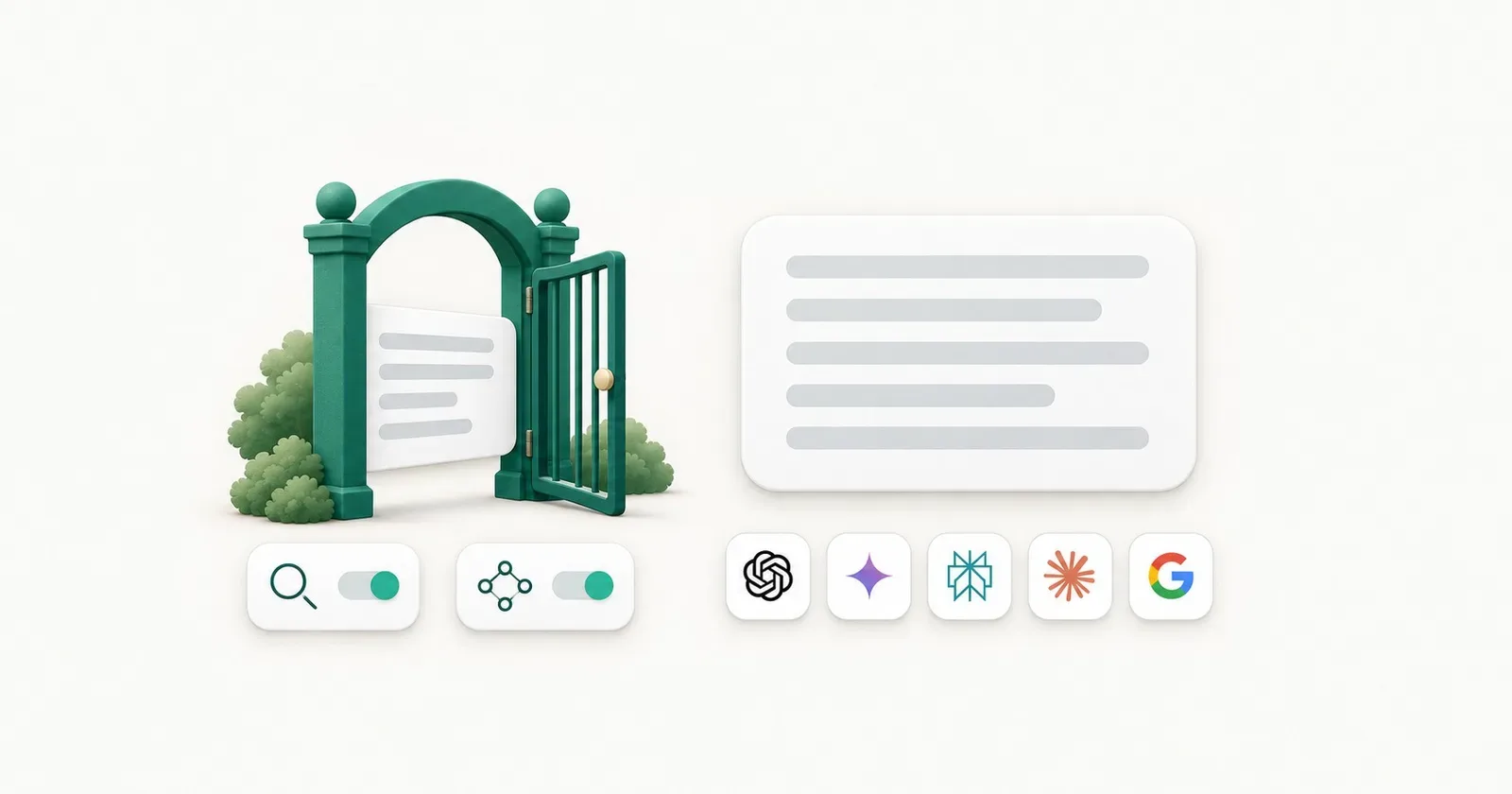
A bank can allow the crawler OpenAI uses for ChatGPT search and check that its firewall permits access. Search permission is separate from training permission. These controls address access, not whether ChatGPT will cite, name, or recommend the bank.
The short version
A bank can take documented steps to help its website appear in ChatGPT search: permit OAI-SearchBot in robots.txt and allow requests from OpenAI’s published IP ranges. That is the actionable starting point for ChatGPT SEO, not a promise of placement. OpenAI’s crawler documentation supports those access steps.
Separate search permission from training permission
Before changing your website, identify which permission you intend to change. OpenAI documents distinct roles for its crawlers and user-triggered requests:
OAI-SearchBot. Documented role: Surfaces websites in ChatGPT search results. What your team should check: Whether robots.txt permits it and your firewall allows requests from its published IP ranges.
GPTBot. Documented role: Crawls content that may be used to train foundation models. What your team should check: Whether its setting reflects your institution’s decision about training use.
ChatGPT-User. Documented role: Handles certain user-triggered actions, rather than automatic web crawling. What your team should check: Do not treat its permission as the control for search inclusion.
These distinctions come from OpenAI’s overview of its crawlers. OAI-SearchBot and GPTBot settings are independent. You can allow search crawling while disallowing GPTBot to indicate that crawled content should not be used to train OpenAI’s generative AI foundation models.
An instruction to “block AI bots” is therefore too vague for this task. Ask which named crawler is blocked and what that decision is intended to accomplish.
Audit both robots.txt and firewall access
Give your website administrator a narrow request: check access for OAI-SearchBot, not permission for every OpenAI crawler.
Inspect the search crawler’s rules
Review your public robots.txt file and identify the rules that apply to OAI-SearchBot. Record whether the relevant public product and branch pages are permitted or excluded.
For an institution choosing to allow search crawling while declining training crawling, the intended distinction can be expressed as:
```text User-agent: OAI-SearchBot Allow: /
User-agent: GPTBot Disallow: / ```
Treat this as an illustration, not a replacement for your existing file. Ask your administrator to check it against the site’s other rules and intended exclusions.
The consequence of a search opt-out is specific. OpenAI states that sites opted out of OAI-SearchBot will not be shown in ChatGPT search answers, although they can still appear as navigational links. A link to your site is therefore not, by itself, evidence that search crawling is allowed.
Check the firewall separately
Do not end the audit after reading robots.txt. OpenAI also recommends allowing requests from the IP ranges published in its crawler documentation.
Ask the administrator to compare those ranges with the site’s firewall rules and examine available request logs for access failures. Record what was checked, what was blocked, and what changed. Use the current source rather than an old copied list.
A useful internal request is:
Please confirm whether OAI-SearchBot is permitted by robots.txt and whether requests from its published IP ranges can reach our intended public pages. Record GPTBot separately. We are checking search access, not changing our training preference.
Keep editorial work separate from access evidence
After the access audit, review the pages you would want a prospective customer to read. The following are editorial recommendations, not proven ChatGPT ranking factors:
Make product names and descriptions accurate and consistent.
Check branch addresses, hours, and contact details.
Explain eligibility and geographic restrictions clearly.
Check effective dates wherever information can expire.
Give rates, fees, and disclosures a careful eye.
These checks help you maintain useful public information. OpenAI’s crawler documentation describes search-access controls, not evidence that these editorial changes improve ChatGPT rankings or earn citations.
Keep your work scoped to your institution. A team at a community bank can start with the public pages relevant to its own service area and products, rather than attempting a sitewide rewrite.
Measure access and answers as different things
Maintain separate records for technical findings and observed answers.
Access record: Save the relevant robots.txt rules, the firewall check, available request evidence, and the date of any change. This documents the access work performed.
Answer record: Save the exact question, date, answer text, and visible source links from a ChatGPT search check. Distinguish a bank name in the answer from a linked source or an explicit recommendation.
Repeat the same questions when reviewing results. If an answer changes after an access fix, record the observation without claiming the fix caused it. The crawler documentation does not provide a placement timetable or a method for attributing answer changes.
For a separate check of observed answers, see the scan page. Keep that evidence separate from your crawl-access record.
Your next action is concrete: send the access request to your website administrator, preserve the findings, and choose the search questions you will check. Do not describe an access change as a ranking improvement.
Questions people ask
Can we block training use while allowing ChatGPT search?
Yes. OpenAI documents OAI-SearchBot and GPTBot as independent controls, so you can allow search crawling while disallowing GPTBot to indicate that crawled content should not be used for training. See OpenAI’s crawler documentation.
Does allowing OAI-SearchBot mean ChatGPT will recommend our bank?
No recommendation follows from that permission alone. OpenAI’s documentation describes access steps that help a site appear in search results, not a guarantee of a citation, mention, or recommendation.
Does ChatGPT-User need permission for search inclusion?
OpenAI says ChatGPT-User does not determine whether content may appear in Search. Its crawler documentation directs webmasters to OAI-SearchBot for search opt-outs and automatic crawling.
Why does a link to our website not settle whether search access works?
OpenAI says sites opted out of OAI-SearchBot can still appear as navigational links. Check robots.txt and firewall access directly rather than treating a visible link as proof, using OpenAI’s documented controls.