Community Bank Marketing in AI Answers: What Gets You Named
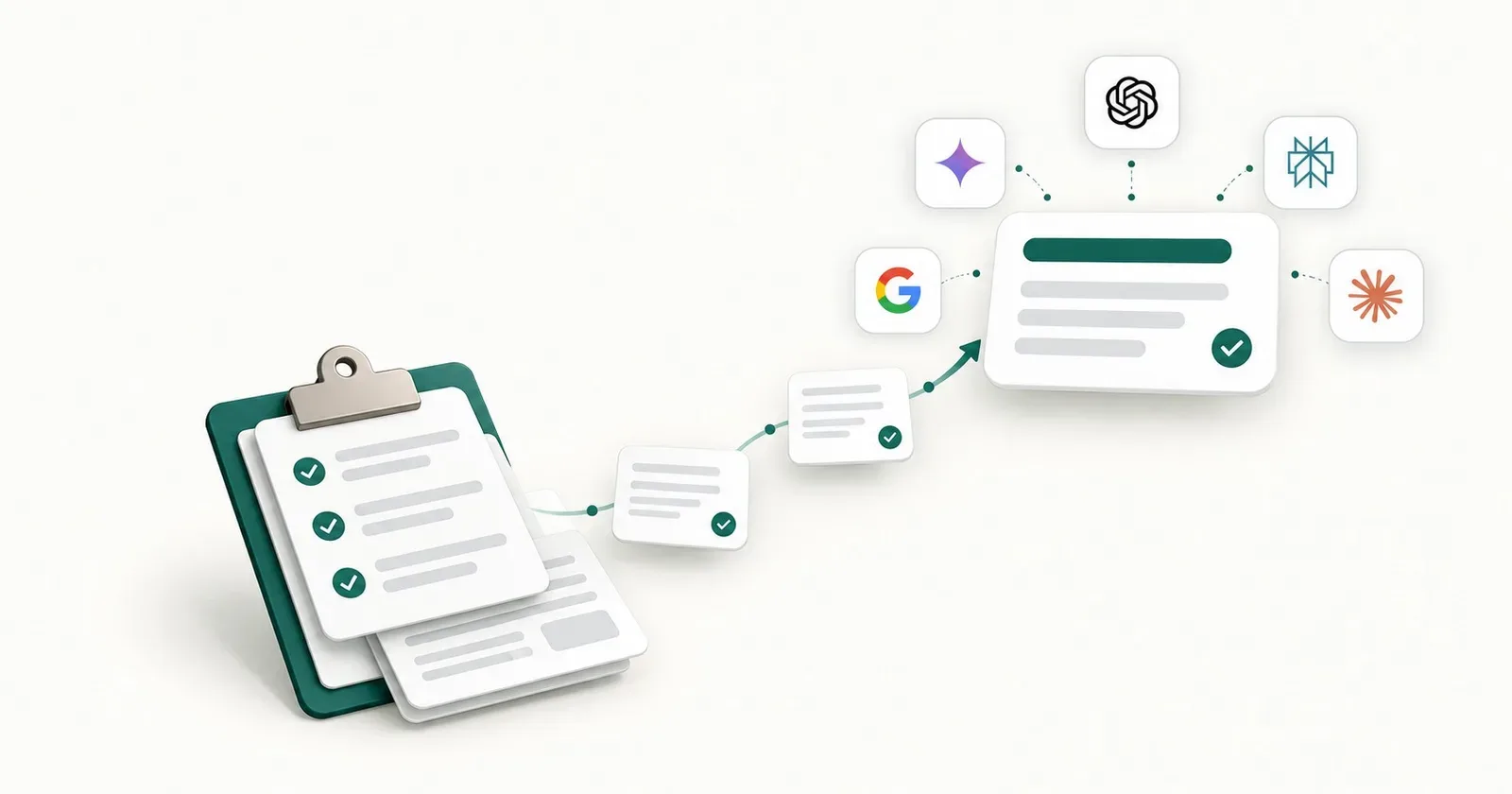
A community bank gets named in AI answers through clear, consistent official facts, readable pages that answer local customers' questions, and repeated checks of what each engine says. No institution can guarantee placement; Google says meeting its requirements does not guarantee serving. You control the inputs and the measurement.
The short version
Community bank marketing now includes a question your old playbook never asked: when a local customer asks an AI assistant where to bank, does it name you? No institution can guarantee placement, and Google itself says that meeting its requirements does not guarantee crawling, indexing, or serving. What you can do is control the inputs the engines read and measure the outputs honestly. Here is the sequence.
Step 1: Make your official business facts clear and consistent
AI assistants build answers from what they can verify. If your name, address, phone number, hours, and official site differ across your website, your Google Business Profile, and third-party directories, an engine has conflicting signals about a basic fact: who you are.
Google documents specific ways for businesses to provide location, official site, and contact information for Search results, the Knowledge Panel, and Maps in its guide on establishing your business details. A verified Business Profile lets you provide or edit your address, contact information, business type, and photos, which can show in Maps and the Knowledge Panel. Google also says structured data provides explicit clues about what a page means, so marking up your branch pages with your official name, address, and hours gives machines a cleaner read.
For a community bank, the practical checklist is short:
One official name, used identically everywhere, including whether you are "Bank," "Bank & Trust," or "Bancshares.".
Every branch address and phone number matching across your site, Business Profile, and major directories.
Hours current, including holiday hours, on both your site and your profile.
Your official domain claimed and consistent. If you recently rebranded or merged, old domains and old names are the first place engines get confused.
A verified Business Profile puts you on the map. It does not, by itself, cause an AI assistant to recommend you in a written answer. That distinction matters, and the next section explains why.
Step 2: Understand the difference between a map listing and a recommendation
A map listing is a record. A recommendation is a sentence. When someone asks "banks near me," a map pack shows locations. When someone asks "I just moved to town and want a bank that actually knows local businesses, where should I go?", the engine writes a paragraph and names a small set of institutions, or names none.
An answer engine does not hand back a list to browse. It decides. Being present in Maps is table stakes; being named in the written answer depends on what the engine can read and corroborate about you beyond your location record: your pages, your reviews, local press, and third-party profiles.
Step 3: Publish readable pages that answer the questions local customers ask
Google says existing SEO best practices remain relevant for its AI features, and that a page must be indexed and eligible for a Search snippet to be eligible as a supporting link. Its AI features documentation also notes that AI Overviews and AI Mode may use different models and techniques and can show varying responses and links. So the same question can produce different answers on different days and different engines.
For a team of one, this means your content work should target real questions, not keyword lists:
"Do you offer small business loans for a first-time restaurant owner?" Write a page that answers it plainly, with who qualifies and how to start.
"What are your current CD rates?" Put rates in text on the page with an effective date, not trapped inside a rate-sheet image or PDF. Facts trapped in images are facts engines cannot quote. Rates, fees, and disclosures deserve a careful eye before they go up, but they need to exist as readable text first.
"Do you have a free checking account with no minimum balance?" Answer it directly, in the first sentence of the page.
Community banks have a genuine edge here. You know the local questions: agricultural lending, first-time homebuyer programs in your county, small-business lines for seasonal businesses. A national bank's generic page cannot answer those. Yours can, and specific local answers are exactly the kind of content an engine can cite.
Step 4: Check named versus recommended results repeatedly, by engine and date
There is no alert when it happens: your rankings look fine, your traffic looks normal, and the question gets decided without you. The only way to know whether AI assistants name you is to ask them, repeatedly, and record what they say.
Three distinctions matter when you record results:
Named: your bank appears in the answer.
Recommended: the answer actively suggests you, not just lists you.
Mentioned: you appear incidentally, for example inside a cited article.
Because Google says responses and links can vary, a single check tells you almost nothing. Ask the same set of questions on a schedule, across more than one engine, and log the engine, the date, and the result each time. A spreadsheet is enough to start. What you are looking for is a pattern: which questions name you, which name a competitor, and which name no one.
When checking by hand runs out, Scanley measures this across the AI engines, recording which institutions are named, recommended, or mentioned, with engine, date, run count, and method attached to each report, as described on its measurement method page.
Step 5: Fix what the pattern shows
Once you have a few weeks of checks, the fixes usually sort into three buckets:
You are never named anywhere. Your facts or your content are the problem. Go back to steps 1 and 3.
A competitor is named for questions you should own. Read the answer's cited sources. Often the competitor has a specific page answering that exact question and you do not. Write yours.
Wrong facts appear. An old address, a former name, a discontinued product. Trace the source, correct it at the origin, and recheck in a few weeks.
This is not legacy link SEO with a new label. The unit of work is the question and the answer, not the backlink. The full picture for institutions your size is on the community banks page.
What to do this week
Verify your Business Profile and reconcile your name, address, and phone across your site and the major directories. Pick the five questions your frontline staff hears most, and make sure a readable page answers each one with dates in text. Then ask those five questions in two AI engines, write down what comes back, and put a recurring reminder on your calendar to ask again.
Questions people ask
Can a community bank guarantee it will appear in AI answers?
No. Google states that meeting its requirements does not guarantee crawling, indexing, or serving, and its AI features can show varying responses and links. You can control your facts, your content, and your measurement, not the engine's final answer.
Is a Google Business Profile enough to get recommended by AI assistants?
No. A verified Business Profile lets you provide address, contact information, business type, and photos that can show in Maps and the Knowledge Panel. That is a location record, not a written recommendation. Recommendations in written answers draw on your pages, reviews, and other corroborating sources.
How often should we check whether AI engines name our bank?
On a recurring schedule, because Google says AI responses and links can vary. A single check is a snapshot. Asking the same questions across more than one engine, and logging engine, date, and result each time, is what turns snapshots into a pattern you can act on.
What content should a community bank publish first?
Pages that plainly answer the questions local customers already ask: small business lending, current rates with effective dates in text, and account terms stated directly. Keep key facts out of images and PDFs so engines can read and quote them.
What if an AI answer states something wrong about our bank?
Trace the claim to its source, usually an outdated directory listing, an old page on your own site, or a stale third-party profile. Correct it at the origin, then recheck the engines in a few weeks to see whether the answer has changed.